A group advocating for the rights to potable water and constant power supply, especially for vulnerable women and girls in low-income rural communities of Nigeria and Africa have decried lack of access to clean and affordable water, as well as electricity in Badeku Community, Ona-Ara Council of Oyo State.
The group, Help Initiative for Social Justice and Humanitarian Development lamented that for over 15 years, residents of Badeku Community and its environs had suffered silently as they grappled with the lack of access to water and electricity.
In response to the dire situation, a team of the Non-Governmental Organisation (NGO) led by Aderonke Ige, visited the community on Saturday, March 8, 2025 to hold town hall sessions with women and representatives of the community on the sidelines of this year’s International Women’s Day (IWD).
A representative of the Baale of Badeku, Prince Mathew Raji, who received a delegation of the NGO in the community, commended the team for the visit and taking the decisive step to Badeku in spite of the bad roads and difficulty of accessibility.
He said the gesture was a demonstration of humanness and empathy and urged the team to support the community by highlighting their plight so that the relevant authorities can take necessary action.
Other spokesmen for the community including the Youth Leader (Olori Odo Badeku), Chief Adeyemo Ramon decried the lack of government presence in Badeku and its surrounding communities, saying that it is desirable for the government to get closer to the people, as they feel abandoned.
Speaking, Aderonke Ige, a lawyer and development advocate empathized with the community and assured them that the organisation would amplify the voice of the community in calling attention to the needs of Badeku and other affected communities in Ona-Ara Council.
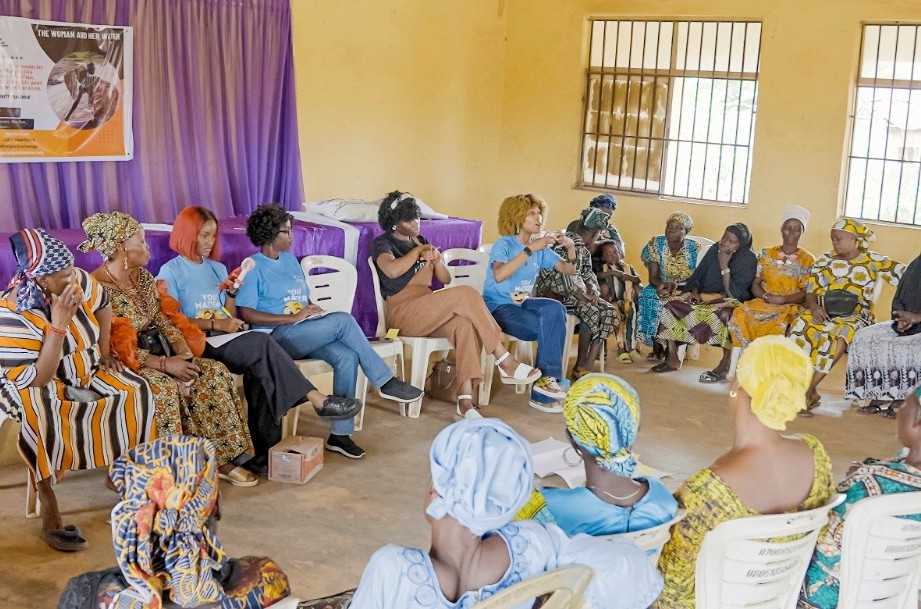
The Help Initiative then held a special dialogue with the theme: The Woman and Her Water with groups of women in Badeku, interrogating the impact of the lack of water on the women and girls in the community.
During an interactive session, the women spoke passionately about the challenges they face, including poor menstrual hygiene, maternal health and cultural burden of domestic care work worsened by the lack of such a resource as critical and essential as water.