The family, as the primary social unit for a child, plays an indispensable role in shaping a child’s physical, social, moral, and psychological development. For any community, country, or continent to maintain its identity and relevance, the family must be prioritized. Within this context, effective parenting is essential to achieving societal goals. Parenting, defined as the act of caring for and nurturing a child, encompasses much more than biological ties; it involves the complex responsibilities of raising and guiding a child towards maturity and social integration.[1]
C.S. Lewis insightfully noted, “Children are not a distraction from more important work; they are the most important work.” This perspective highlights that parenting should never be regarded as a hindrance but rather as a fundamental societal function. Through parenting, children internalize societal values and develop an understanding of their beliefs and cultural heritage.
Unfortunately, many families face crises that disrupt these developmental processes. A family crisis can be described as a state in which interpersonal relationships within the family unit become severely strained, potentially leading to dissolution. In countries such as Nigeria, insufficient attention to the needs of children from crisis-affected homes threatens the future leadership and social cohesion of the nation. Without early and effective interventions, children from unstable families risk becoming dysfunctional adults and ineffective parents themselves[2].
Regrettably, some caretakers appear indifferent to the lasting consequences of poorly managed family crises. Neglecting parental responsibility while taking pride merely in procreation undermines the very essence of childbirth and family life. This attitude can be likened to a drowning person, unbothered by external dangers, a stance unworthy of those entrusted with parenting.
Beyond the home, children from troubled families often face misunderstanding and harsh treatment in schools. They may be mislabeled as rebellious and subjected to punitive measures, compounding their emotional distress. Sensitivity, counseling, and psychological support are critical in addressing the challenges these children face, rather than exacerbating their difficulties.
As an educator, I have observed that poorly managed family crises expose children to various vulnerabilities. For example, girls raised by single mothers or inattentive fathers may seek paternal affection from unhealthy sources, while boys raised without active fathers often develop excessive emotional dependence on their mothers. These dynamics underscore the importance of attentive parenting and educational support.
It is imperative for educators and parents alike to recognise that fluctuations in a child’s mental health are frequently triggered by psychological stressors linked to family instability. Although children differ in their responses, the impact of family crises on mental well-being is profound and generally unavoidable once the child is mature enough to understand their circumstances.
Statistical data and daily observations confirm that family crises serve as a significant risk factor, exposing children to various negative behaviors and mental health challenges. Therefore, it is crucial for parents to proactively avoid unnecessary conflicts that could escalate into crises.
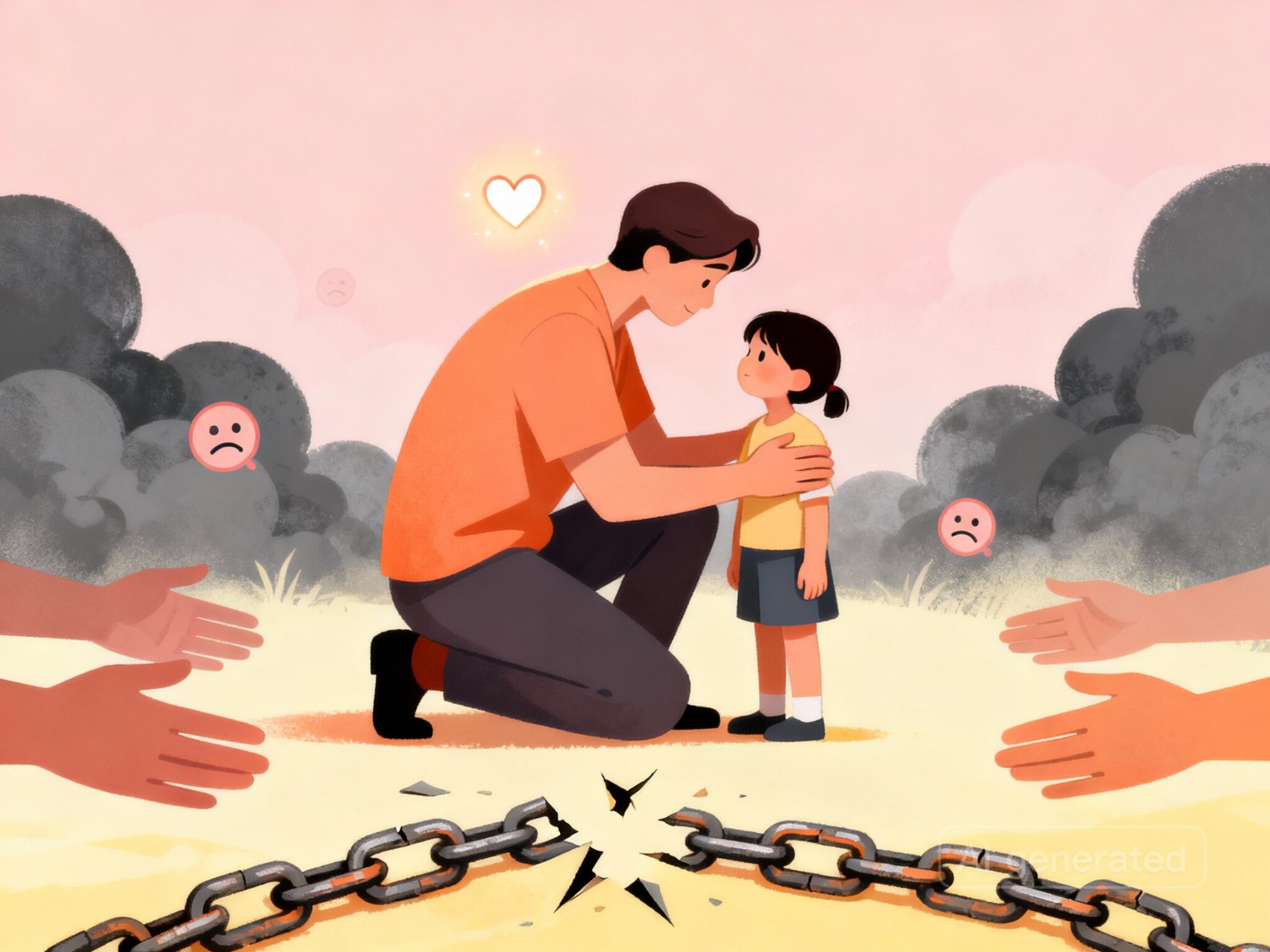
In conclusion, the adage that “two wrongs don’t make a right” must guide our approach to family challenges. Parents should prioritize the mental health and developmental progress of their children, even in the event of separation or divorce. Family crises weaken the family bond and should never be normalized or trivialized. After all, a chain is only as strong as its weakest link.
[1] Parenting: Defined as the process of raising a child, supporting their physical, cognitive, social, emotional, and educational development beyond just biological relationships. This is detailed on Wikipedia’s page on parenting, which explains various parenting practices and their impact. https://en.wikipedia.org/wiki/Parenting
[2] Family crisis: Described by Study.com as a state where relationships within a family become strained to the point of possibly breaking up the family unit, often leading to emotional and behavioral problems in children. https://projectmaster.com.ng/assessment-of-family-crisis-and-its-effect-on-children/
Adedayo Ige is an Early Childhood Educator and Child Development Programme officer at Help Initiative.
I totally agree with this
Thank you! That’s reaffirming.